
24/7 emergency water damage · Denver & Colorado
Water damage restoration in Denver and across Colorado's Front Range
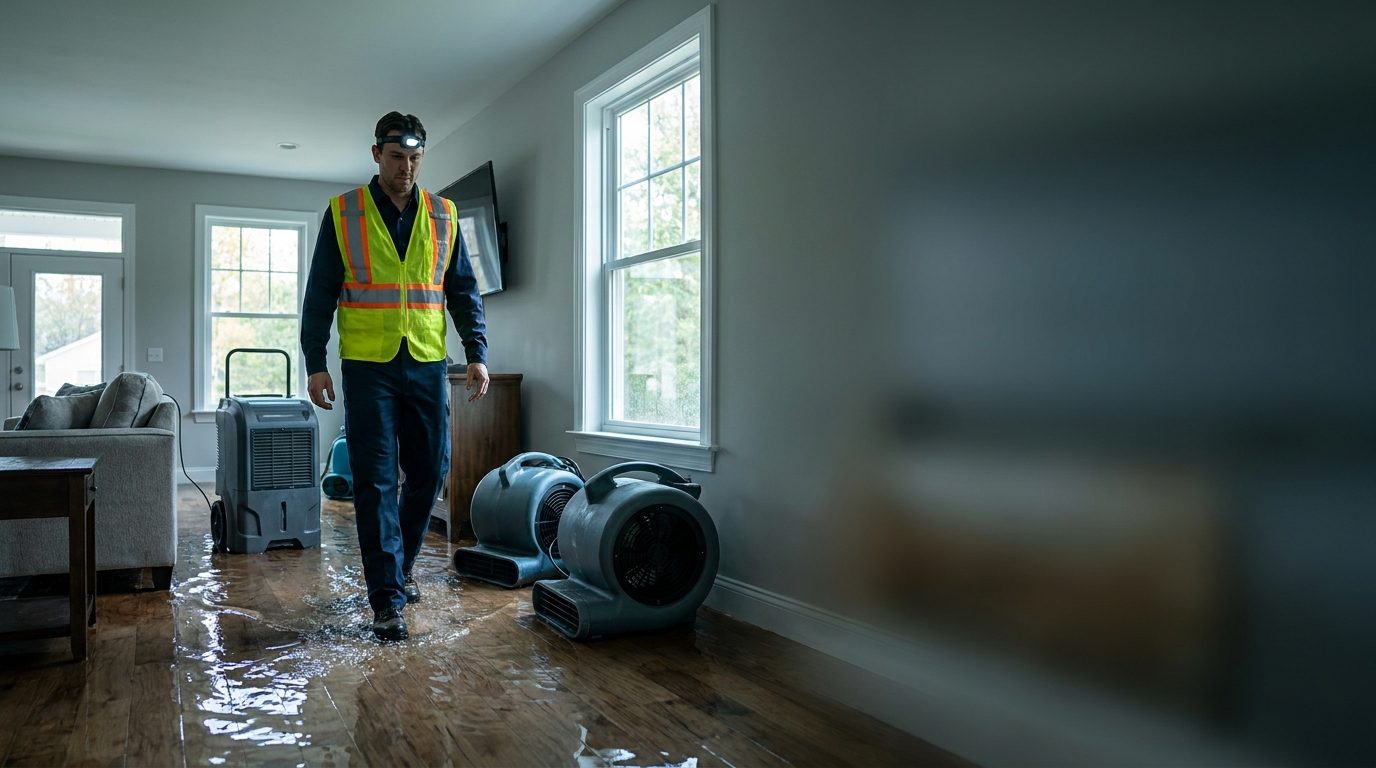
Pipe froze and split during a cold snap? Basement took on water after a spring storm? We get the water out, dry the structure properly, and show you the moisture readings so you know it's actually dry, not just dry to the touch.
- Moisture readings logged every day
- Written scope before work starts
- Dated photos for your insurance claim
- Price tied to the scope
Open 24/7, including nights, weekends and holidays
A Colorado water damage company
Water damage cleanup from Fort Collins to Pueblo
Most of our calls start the same way. Someone walks downstairs and the basement carpet squishes. Maybe a supply line let go under the sink, maybe a pipe in an outside wall froze overnight, maybe the sump pump quit halfway through a storm.
Whatever caused it, the job is the same: get the water out, find everywhere it went, and dry the structure itself, not just the carpet, until the moisture readings are back to normal.
We cover 50 cities and towns. That's Denver and the metro suburbs, the foothills and mountain towns from Morrison and Evergreen up to Conifer and Pine, Boulder and Longmont, up through Fort Collins and Greeley, south through Lone Tree, Parker and Castle Rock to Monument, Colorado Springs, Manitou Springs and Pueblo, and east to Bennett, Strasburg and Byers.
Every job ends with a written record: what we found, what we tore out, the daily readings, and photos. If you're filing a claim, that's exactly what your adjuster is going to ask for.
- Readings, not guesses Moisture levels are measured and written down every day until the job is done.
- Scope agreed before we start Nothing outside it happens without talking to you first.
- Exclusions in writing What the quote doesn't cover is spelled out, not implied.
- A price that follows the scope Not your zip code, not how stressed you sound on the phone.
Water still coming in?
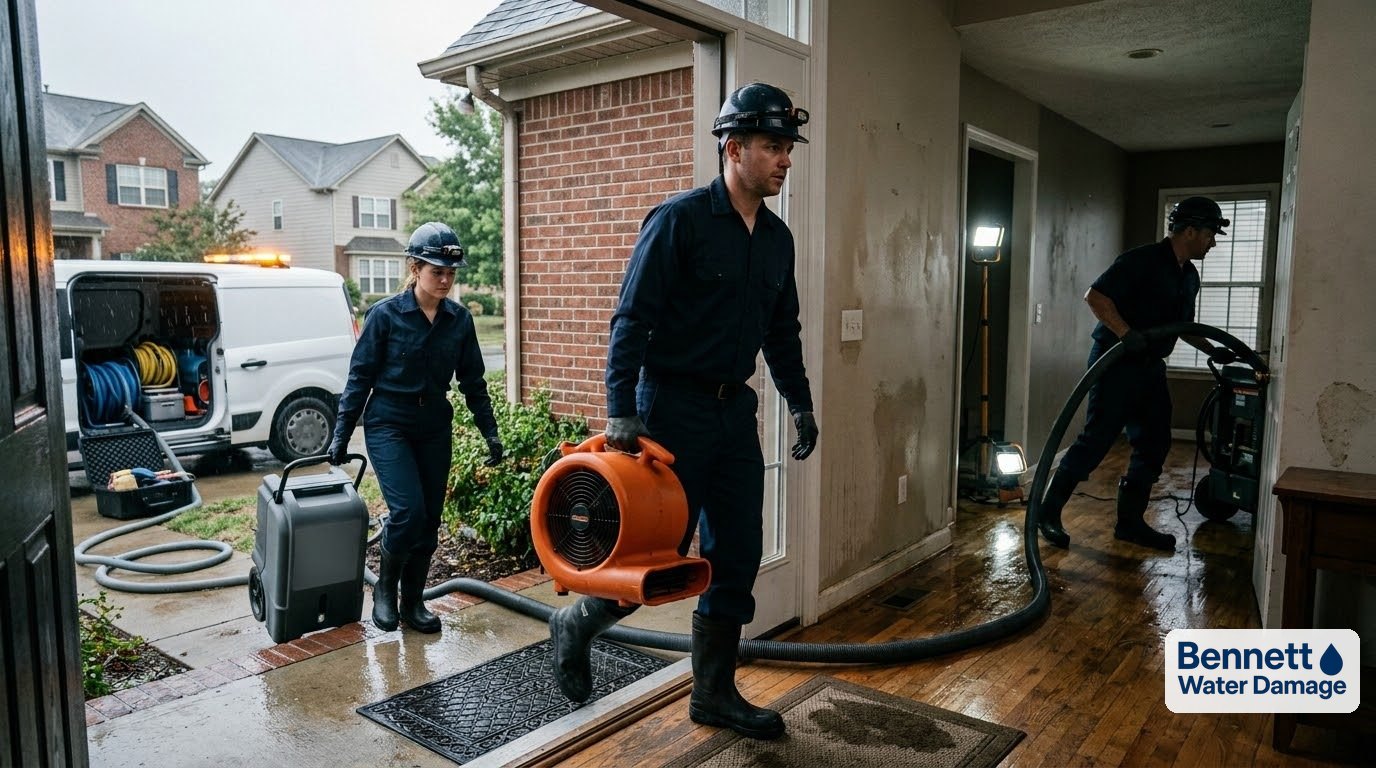
Shut off the main valve if you can find it, then call. We'll talk you through what to do right now and set up a time to come look.
(619) 776-0635 Call nowBennett Water Damage is a water damage restoration company serving Denver and 49 other Colorado cities and towns, from Fort Collins and Greeley down to Colorado Springs and Pueblo. We handle burst and frozen pipes, flooded basements, storm water and sewage backups. We answer 24/7. Every job starts with an on-site assessment and a written quote. Call (619) 776-0635.
Water damage services
Emergency Water Extraction
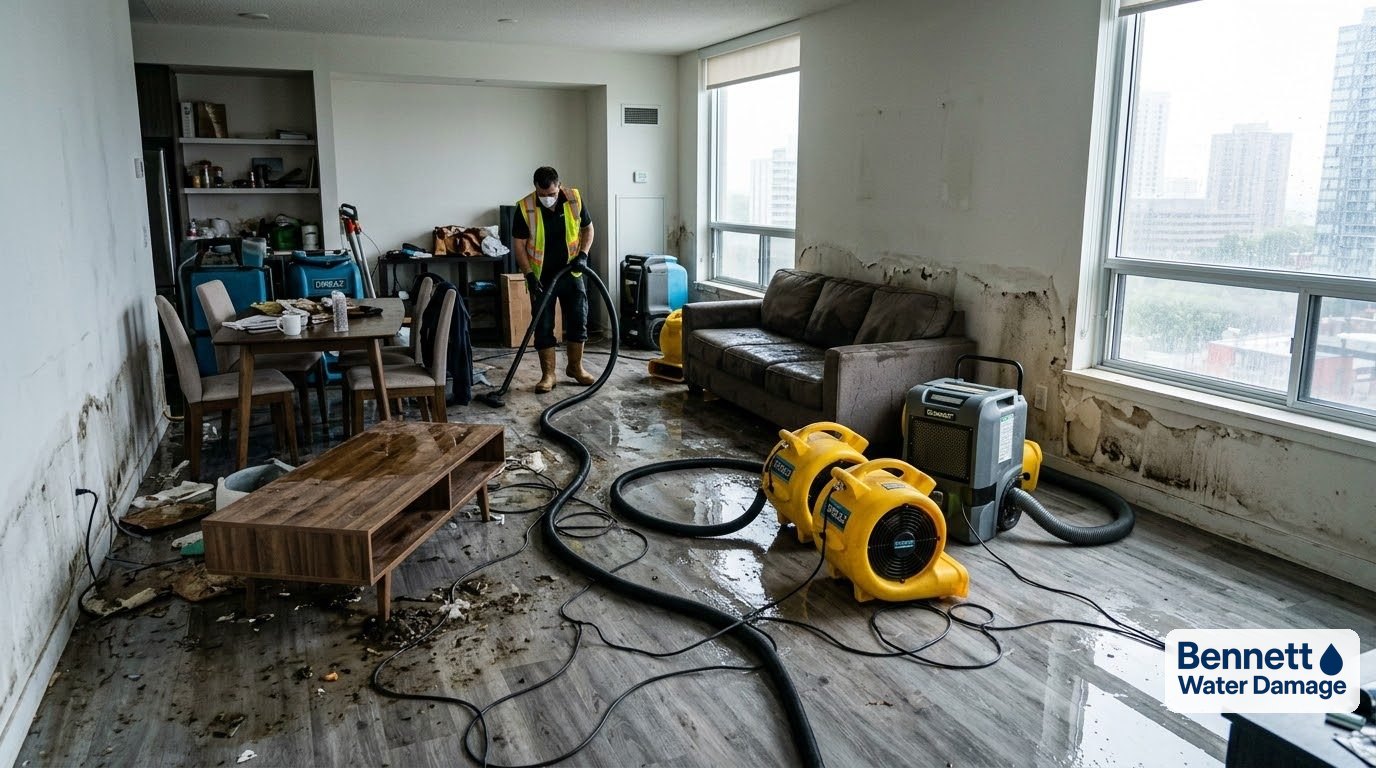
Standing water pumped and vacuumed out before it wicks up the drywall and into the framing.
Emergency water extraction →Structural Drying
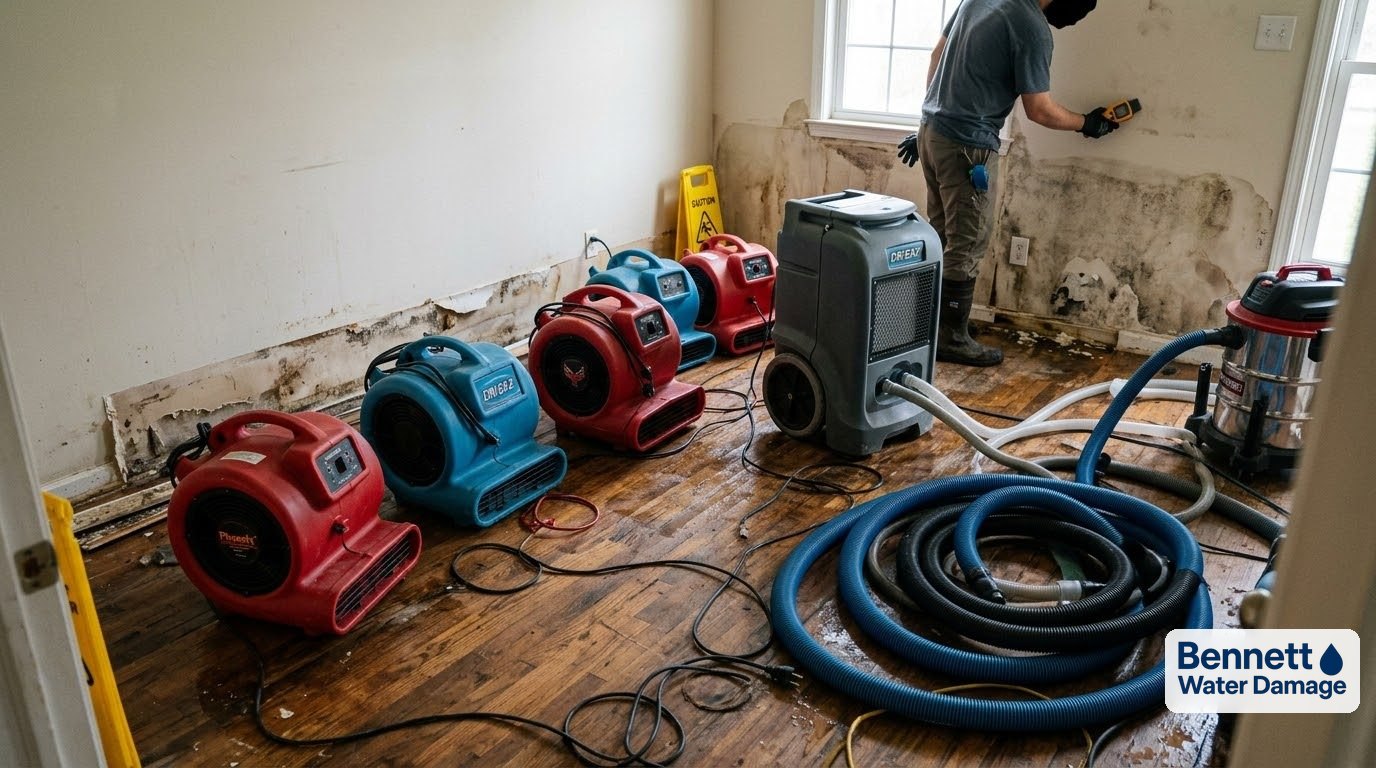
Air movers and dehumidifiers on the framing, subfloor and wall cavities, with readings taken every day.
Structural drying →Burst & Frozen Pipe Cleanup
The mess a split pipe leaves behind after a Colorado cold snap, from the ceiling below to the basement floor.
Burst pipe cleanup →Storm & Flood Recovery
Cleanup after hail, flash flooding, or snowmelt gets into the basement through window wells and foundation cracks.
Storm & flood recovery →Sewage Backup Cleanup
Floor drain or toilet backups handled as Category 3 water: contained, removed and disinfected.
Sewage backup cleanup →Moisture Inspection
A written moisture map that shows what's wet, how wet it is, and what it's likely to damage next.
Moisture inspection →Why water damage in Colorado works differently
Every season here brings its own kind of water problem. These are the ones we see most along the Front Range.
Frozen and burst pipes
Denver can go from 50 degrees to below zero in a day. Pipes in exterior walls, garages, crawlspaces and over unheated rooms freeze and split, and most people don't find the leak until the thaw, when the water starts running again.
Snowmelt and sump pumps
A heavy March or April snow melts right against the foundation. Window wells fill up, water finds cracks in the basement wall, and sump pumps that sat idle all winter pick that moment to fail.
Hail and flash flooding
Afternoon thunderstorms can drop an inch of rain in half an hour. Hail-damaged roofs and gutters let water into attics and ceilings, and homes near the foothills and in Colorado Springs get fast runoff.
Sprinklers and swamp coolers
Sprinkler systems that didn't get blown out before the first freeze, and swamp cooler lines left full on the roof, are two of the most common fall leaks we see.
One thing people don't expect: Colorado's dry air makes wet materials look dry fast. Carpet and drywall surfaces can feel fine within a day or two while the subfloor, bottom plate and insulation behind the wall are still holding water. That's why we go by moisture meter readings instead of how things feel.
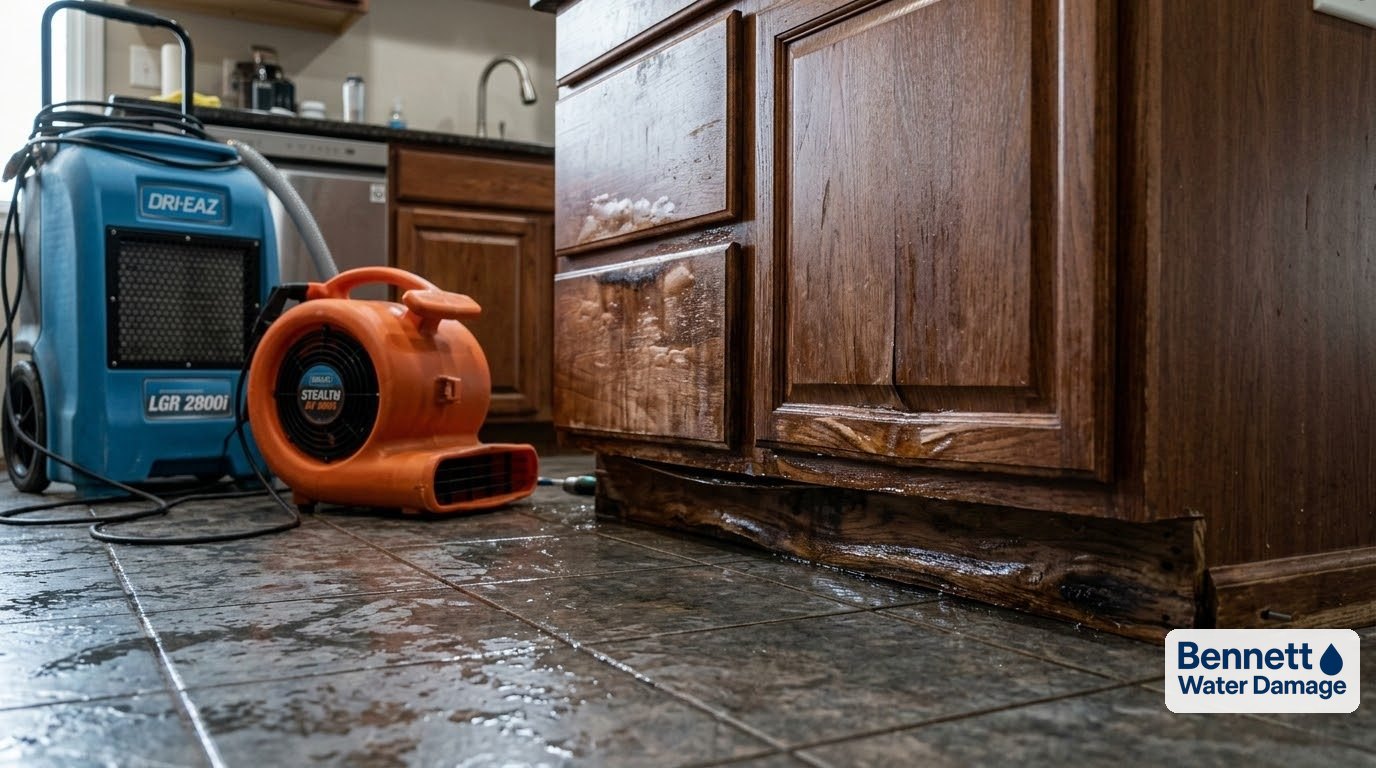
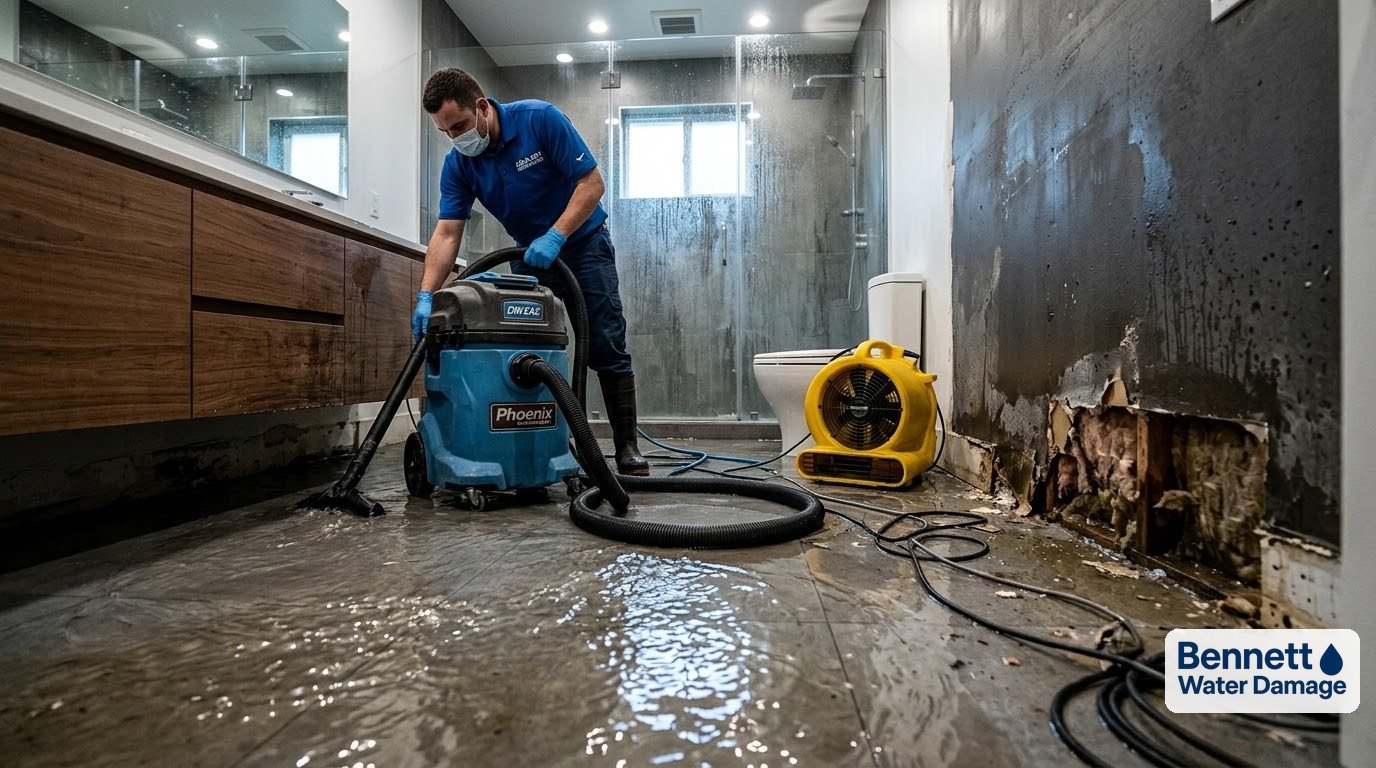
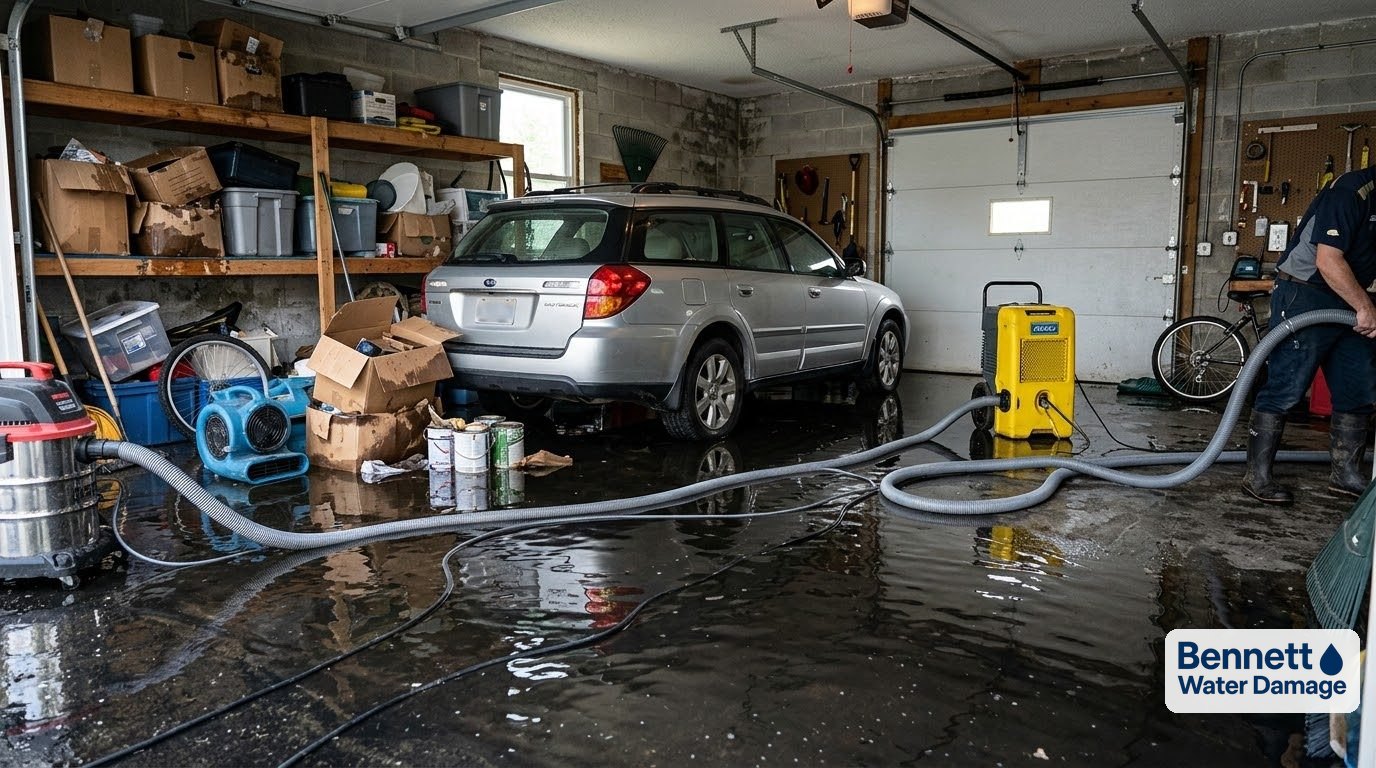
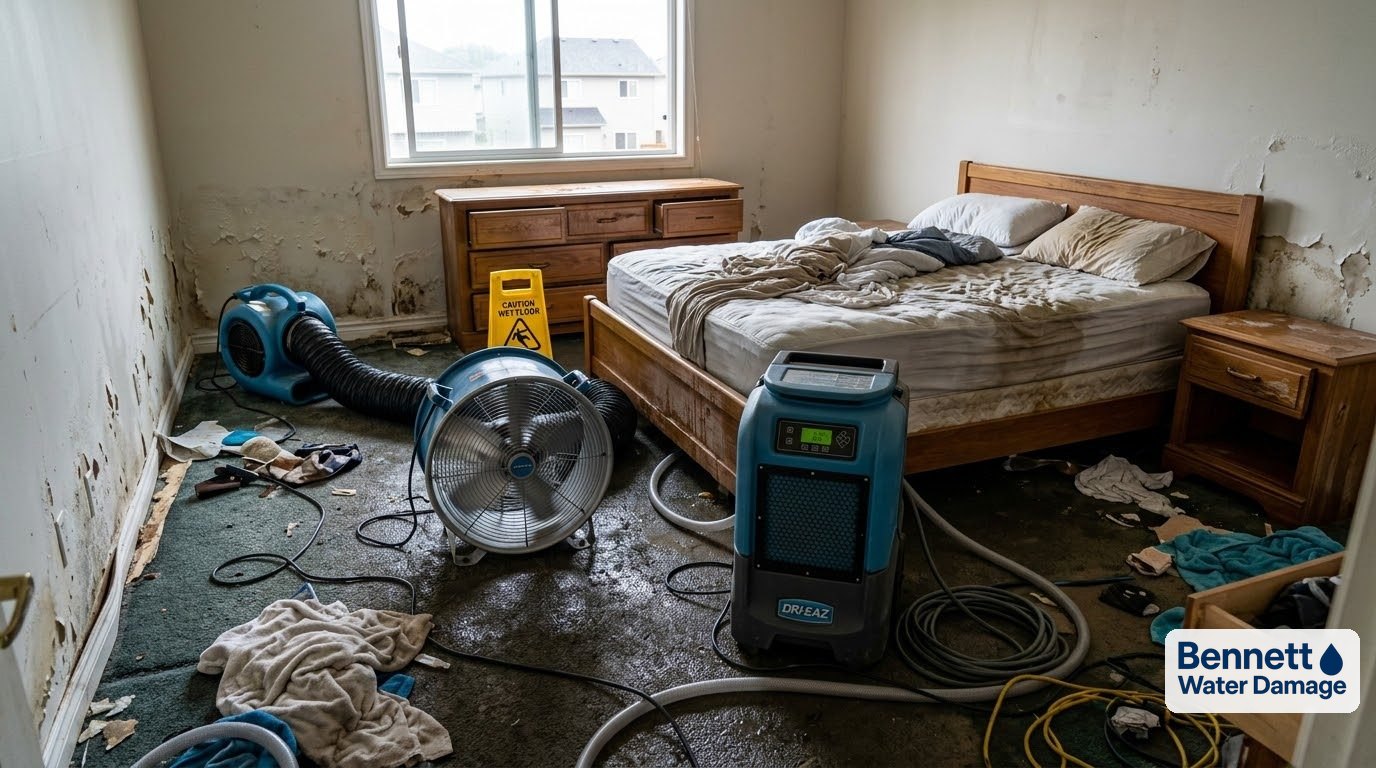
The kind of damage we clean up
Why people call Bennett Water Damage
We show you the numbers
Moisture readings get taken and written down every day. You'll know the job is done because the numbers say so, not because we said so.
We'll tell you if you don't need us
Sometimes a small leak caught early just needs a fan and a day. If that's your situation, we'll say so, and you'll get it in writing like any other finding.
You know who's in your house
We tell you up front who'll be on site and who they work for. No surprise subcontractors.
Paperwork your adjuster can use
Dated photos, daily moisture logs, a list of what was removed and why. It makes the insurance side a lot less painful.
No pressure to sign
An assessment isn't a sales pitch. Want a second opinion or a day to talk to your insurance company? That's fine, and the price doesn't change.
We refer out what isn't ours
If the fix is really a plumber's or a roofer's job, we'll tell you that instead of stretching to cover it ourselves.
What happens after you call
- 1
Tell us what's wet
Where the water is, roughly how long it's been there, and whether it's still coming in. If it is, we'll help you find the shutoff while you're on the phone.
- 2
We look before we price
We map where the water actually went, which is usually further than it looks: under flooring, up the drywall, into the next room. You get a written scope and price before any work starts.
- 3
Extraction and drying
Standing water comes out first. Anything that can't be saved, like soaked carpet pad or swollen baseboard, gets removed. Then the air movers and dehumidifiers go in, and we check readings every day.
- 4
Sign-off when it's actually dry
Equipment comes out when the readings hit dry, not on a set day. You get the final report: photos, readings, what was removed, and anything worth keeping an eye on. The invoice matches the scope line for line.
What customers have said
What struck me most was simply how much time was spent carefully looking before anyone even mentioned a figure of any kind. I have had other contractors quote me a price straight from the doorstep before seeing anything at all, and this visit was very clearly nothing like that experience whatsoever.
I was cautious about the cost from the very start of the call and said so upfront without being embarrassed about it. Nobody tried to push me toward the larger, more expensive option once I said that. They simply priced what I actually asked for and told me honestly what I would be trading off.
Came out, looked properly, and told me the problem was contained. I had been quoted for the full job two days earlier. Took an afternoon.
They noticed early on that I had two rather elderly cats in the house and were genuinely careful about doors and gates all day without me ever having to ask twice about it. A small consideration on their part, but it meant I did not spend the whole day anxiously checking on them myself.
The crew that started the job on the Monday morning was the exact same crew that finished it on the Thursday afternoon, with no substitutions at any point along the way. It sounds like a fairly low bar to clear, but the last contractor I used never once managed it across a similar job.
One specific detail stuck with me long afterward — they showed me, before any work even started, exactly which part of the whole job would likely need doing again in a few more years regardless of whatever we chose to do now, so absolutely nothing came as a surprise to me later on.
Water damage restoration service areas in Colorado
50 cities and towns in 11 counties, from Northern Colorado down to Pueblo, and from the mountains to the eastern plains.
Denver metro
Foothills & mountains
Pikes Peak region & Pueblo
Water damage questions we get a lot
What should I do in the first hour after a pipe bursts?
Shut off the main water valve first. In most Colorado houses it's in the basement or crawlspace, where the service line comes through the foundation wall. If water is anywhere near outlets, cords or the furnace, turn off power to that area at the breaker, but only if you can reach the panel without standing in water. Take photos and video before you move anything, since your insurance company will want them. Then call your insurer and call us.
How long does it take to dry out a flooded basement?
Most finished basements take three to five days with air movers and dehumidifiers running. Colorado's dry air helps, but it also fools people: carpet and drywall can feel dry in a day while the bottom plate, subfloor and insulation behind the wall are still wet. We take moisture readings every day and leave the equipment in until the readings say the materials are dry, not until a set date comes around.
Does homeowners insurance cover water damage in Colorado?
It depends on your policy and on where the water came from. Sudden, accidental water, like a burst pipe or a failed washing machine hose, is usually covered. Slow leaks that went on for months, groundwater, and surface flooding usually aren't, and sewer backup often needs a separate endorsement. Read your declarations page or ask your agent. Whatever you have, we give you dated photos, daily moisture logs and a written scope, which is the paperwork an adjuster asks for.
Can I just dry it out myself with fans and a shop vac?
For a small spill of clean water that you caught right away, often yes. Once water has had time to soak under laminate, into carpet pad or up the drywall, fans alone usually dry the surface and leave moisture trapped underneath. That trapped moisture is what turns into mold and a musty smell a few weeks later. If you're not sure, call and describe it, and we'll tell you honestly whether you need us.
Is water from a sewer backup dangerous?
Yes. Sewage is treated as Category 3 water, meaning it carries bacteria and other contaminants. Keep kids and pets out of the area, don't try to save carpet or pad it has touched, and don't run your HVAC if the returns are in the affected room. Cleanup involves containment, removal of contaminated porous materials and disinfection before anything is dried.
Which parts of Colorado do you cover?
We work in 50 cities and towns: Denver and the metro suburbs, the foothills and mountain towns along Bear Creek and Highway 285 like Morrison, Evergreen, Conifer and Pine, Boulder, Longmont, Loveland, Fort Collins, Windsor and Greeley to the north, Lone Tree, Parker and Castle Rock in Douglas County, Monument, Colorado Springs, Manitou Springs, Fountain and Pueblo to the south, and Bennett, Strasburg, Byers and Deer Trail out east. If you're just outside that list, call anyway and we'll tell you whether we can get to you.
Do you handle the permits?
If a job needs a permit, we tell you at the quote stage, including who pulls it and how much time it adds.
Not sure if it's bad enough to call?
Call anyway. Tell us what you're seeing and we'll tell you straight whether it needs a visit or whether it's something you can handle yourself tonight. You don't have to decide anything on the phone.